The Journey
A Life in Music
There are journeys measured in years, and journeys measured in hours of practice. Barnali's belongs to the second kind.
01
A Childhood Spent Listening
While the world around her moved through friendships and games, she was often somewhere quieter. Solitude arrived early, and music arrived with it.
Before anyone had described a career to her, before there was a stage or an audience, there was simply a girl and a sound she could not leave alone.
02
Riyaz as Companionship
Practice was not a discipline imposed from outside. It became the language of her inner world — the place she went when she had nowhere else to go.
Hours accumulated the way they do in every classical life: unseen, unremarkable from the outside, and entirely decisive.
03
Eleven
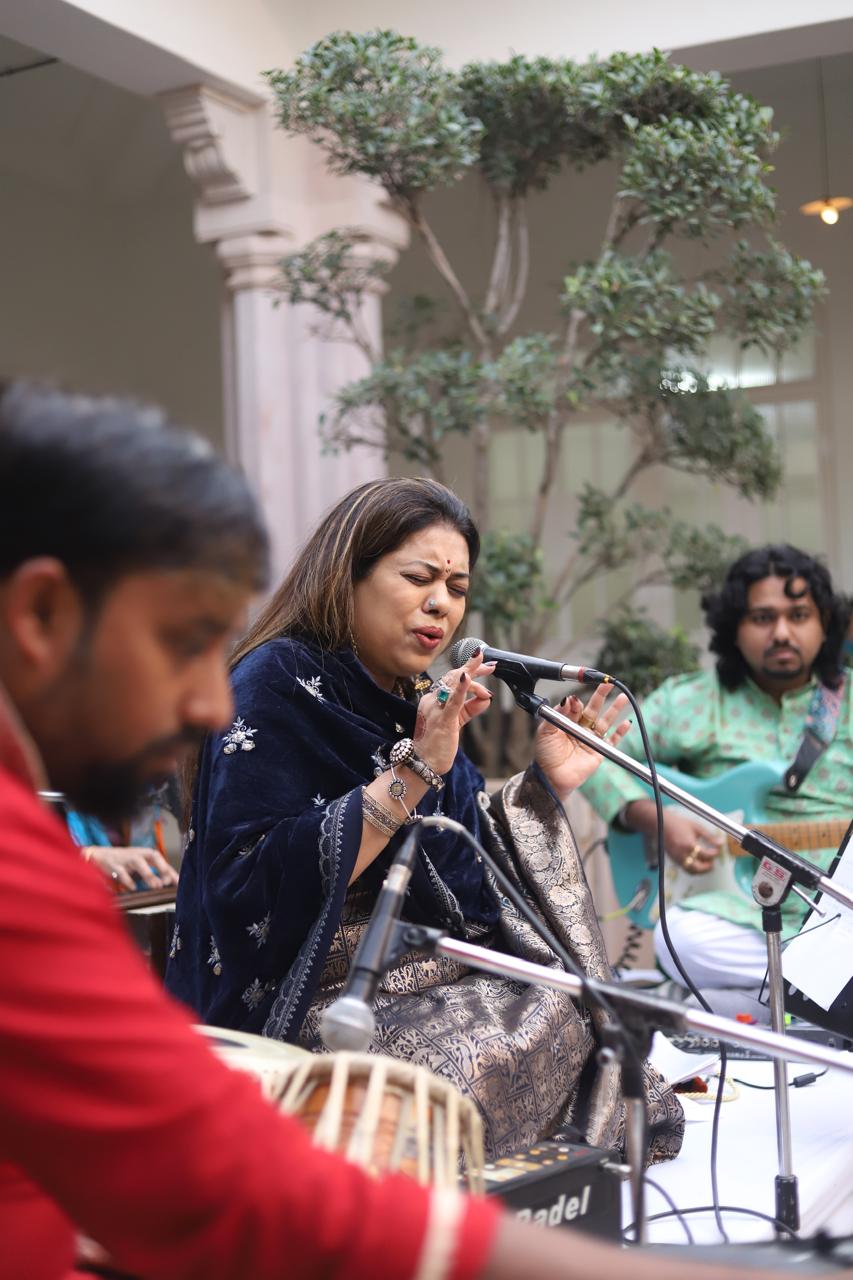
By the age of eleven she understood that singing was not simply something she enjoyed. The happiness her voice brought to others revealed something deeper — a calling.
It is a small age at which to recognise a life. It is also the age at which many classical musicians do.
04
Learning from the Tradition
Her musical understanding was shaped by great exponents of Hindustani music — Padma Vibhushan Girija Devi and Vidushi Purnima Chaudhary of the Banaras gharana, and Padma Bhushan Shobha Gurtu of the Jaipur tradition.
From them came something that cannot be written into a syllabus: a way of listening, a sense of proportion, and permission to feel inside a form.
05
Building a Repertoire
Khayal gave her structure. Thumri, dadra and kajri gave her a vocabulary for feeling. Tappa demanded agility; ghazal asked for restraint; bhajan returned everything to devotion.
Together they became a single repertoire rather than a collection of styles — different doors into the same room.
06
On Stage
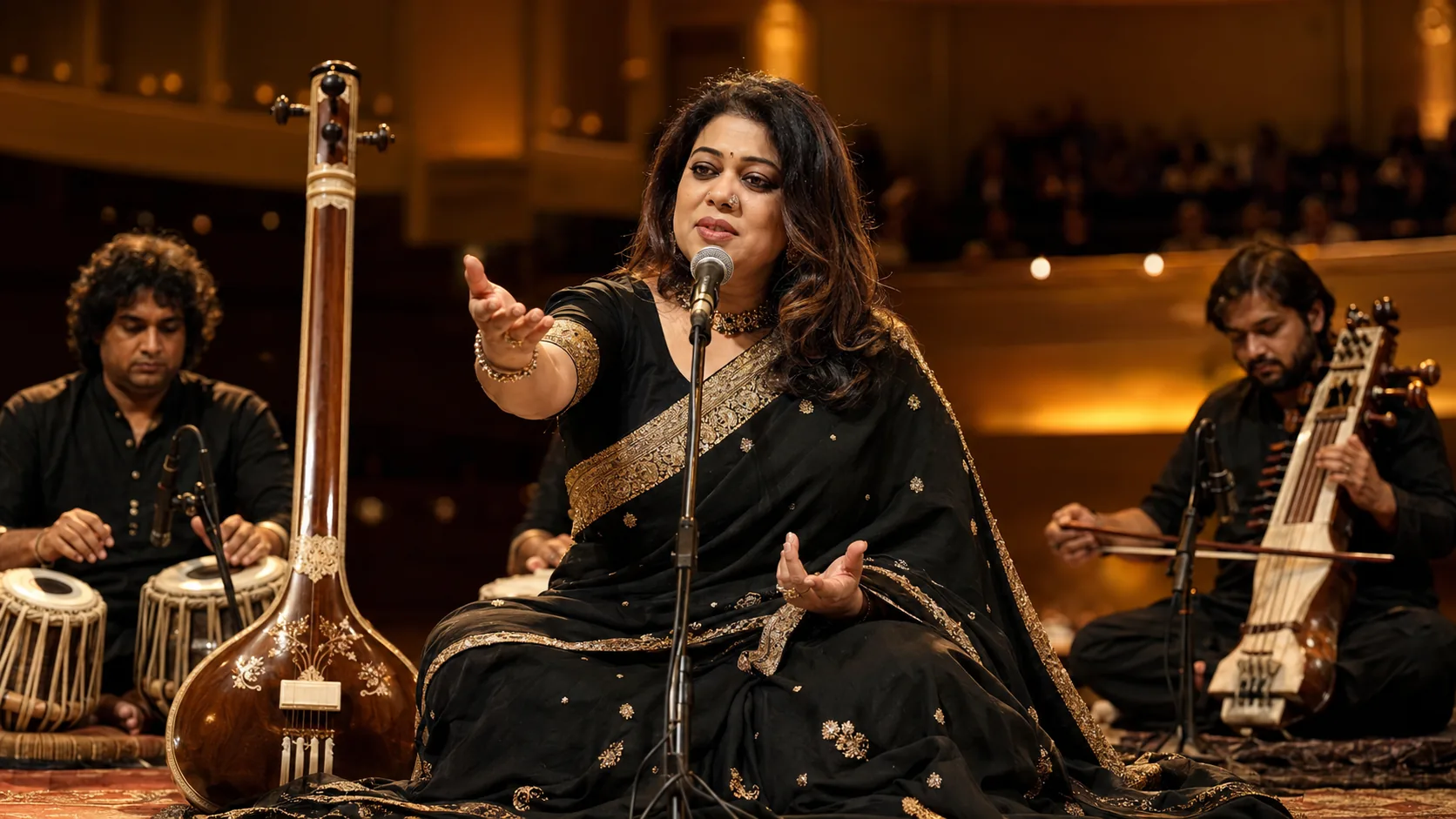
Performance introduced its own education. A concert is a conversation with a room, and every room asks for something slightly different.
The intimacy of the mehfil and the scale of the auditorium each shaped how she sings.
07
Cinema
Her voice travelled into screen storytelling — into the musical world surrounding Sanjay Leela Bhansali's Heeramandi, and into Bengali cinema through Har Har Byomkesh and Aschhe Abar Shabor.
A classical voice in a narrative context has to serve someone else’s story. That, too, is a discipline.
08
Creative Encounters
A specially curated project with filmmaker and cultural visionary Muzaffar Ali brought her to poetic works attributed to Wajid Ali Shah, placing poetry, composition and classical interpretation in conversation.
A musical collaboration connected with a composition for a Subhash Ghai film project extended that reach further.
09
Teaching
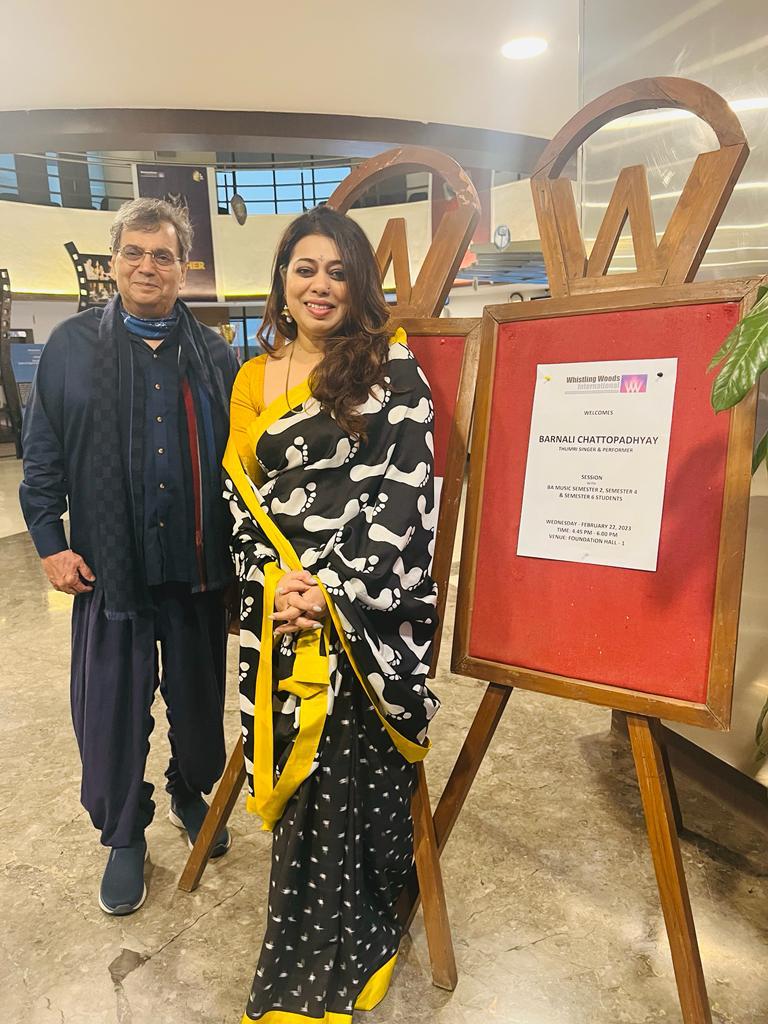
Preserving classical music also means teaching it. Her practice continues through an institution devoted to teaching, grooming and strengthening the roots of India’s rich musical lineage.
The intention is not simply to pass on compositions, but to nurture listening, discipline, sensitivity and patience.
- End of chapters
10
Music and Wellbeing
Her participation in music-based wellbeing initiatives associated with the United States and Bangladesh has explored how music can contribute to positivity, emotional connection and human wellbeing.
It is an extension of something she already knew privately: that music holds people.
Sometimes the deepest pain gives birth to the most beautiful music.
Still Beginning
Still Learning. Still Practising. Still Singing.
For Barnali, accomplishment has never meant arrival. Music remains an ongoing practice — a relationship renewed every day through listening, discipline and surrender.